Low-Income Families Can Get Health Insurance
There is no reason if you are low income to not have health insurance coverage in Nevada. Being in a low-income bracket doesn’t mean hospitals and doctors will provide services for free. To the contrary, they want to get paid! There is no guarantee that you won’t face a serious injury or illness, and you might find yourself with a overwhelming amount of medical bills.
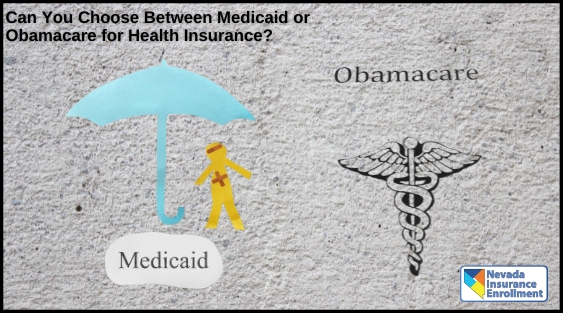
The good news is that even those with very limited incomes can get low-cost health insurance or even free medical coverage through the Affordable Care Act’s Marketplace health insurance plans, often referred to as Obamacare, or through Nevada Medicaid. While both ACA (Obamacare) insurance plans and Medicaid help reduce or eliminate your medical costs (you don’t have to cover your medical expenses all on your own,) these two programs are vastly different from one another, and your income and family size will determine which type of coverage you are eligible for.
The Difference Between ACA Obamacare Health Insurance and Medicaid
Obamacare is typically a term used to refer to private health insurance that is purchased through a health insurance exchange (Nevada Health Link). These plans are not provided by the government but are instead covered by health insurance companies like Health Plan of Nevada or Ambetter. While these health insurance plans are not run by the government, they are required to comply with government regulations, namely, the ACA’s 10 essential health benefits.
Medicaid, on the other hand, is a health insurance program that is jointly funded by the federal government and the state government. This government program is a social welfare program and applicants are generally required to have an income lower than 138% of the “Federal Poverty Level” to qualify for Medicaid coverage. While 75% of Medicaid enrollees have managed care plans that are administered by private insurers, these insurers contract with the government to provide Medicaid benefits.

Enrolling in Obamacare Health Insurance vs. Medicaid
Those whose annual income is between 138% + of the federal poverty level may qualify for a Government “subsidy” to help cover the monthly cost of a health insurance plan. You can begin your application for an “On Exchange” (Obamacare) health insurance plan with a “subsidy” by calling your local agent here at Nevada Insurance Enrollment. If your income is too high, you will most likely be responsible for the entirety of your monthly premium, and we’ll help you choose an “Off Exchange” health insurance plan. Those whose income is less than or up to 138% of the FPL (federal poverty level) may qualify for free health insurance coverage through Medicaid. Unlike Obamacare plans, Medicaid health coverage begins immediately upon acceptance into the program. In some cases, such as during pregnancy, coverage may even be retroactive and cover medical care received prior to enrollment. Because Medicaid is for those with low income, there is typically no cost-sharing (money you must pay) responsibilities out of pocket.
Understanding Which Health Insurance Coverage You Should Apply For at Nevada Insurance Enrollment
Wading through the different types of health insurance options that are available can be a challenge, especially when you have a budget to consider. Choosing Medicaid or Obamacare is not something you can do. Qualifying for Medicaid or Obamacare is based on your income and family size. That’s not something you can decide as it is pre-calculated by your income. Fortunately, our health insurance agents specialize in helping people in all income brackets find the best coverage for their needs and budget. At Nevada Insurance Enrollment, our health insurance agents help you without any costs to you. Their help will NOT raise your costs and they can help you find and apply for health insurance coverage for an Obamacare plan OR enroll you into a health insurance plan “Off Exchange” (without a Government subsidy).
Recent Posts

The Tow Truck Damaged My Vehicle After An Accident
This also applies to damage that occurs after the accident. While you may consider the damage from the accident and the damage from the tow truck to be all one incident, your insurer will view it differently.
A Friend Wrecked My Car, What Happens Next?
If your friend was hit by an insured driver, the process will be simple enough. The at-fault driver will file a claim with their insurance company, who will pay to get your vehicle back to pre-accident condition. If the collision was bad enough to cause an injury, the at-fault driver’s auto insurance could also cover medical bills, lost wages and any other expenses associated with the accident.
Why Every Household Driver Should Be On Your Auto Insurance Policy
Generally speaking, anyone who lives with you that has a drivers license – whether they’re a member of your family or not – is considered by your insurer to be a member of your household. College students away from home without a vehicle aren’t required to be on a policy, and could be a “permissive” driver.
Search This Website
Most Popular Pages
By page visits (this month)
#1) Health Insurance Subsidy Chart
#2) Health Insurance
#3) Health Insurance WITH a Subsidy
#4) Insurance Blog
#5) Request a Quote
Top 5 Most Popular
By page visits (this month)
#1) Health Insurance Subsidy Chart
#2) Health Insurance
#3) Health Insurance WITH a Subsidy
#4) Insurance Blog Posts
#5) Request a Quote
Recent Posts
Year Round Enrollments For Health Insurance Ended 10/1/2019
Up until 10/1/2019, Nevada residents had the option of enrolling in off-exchange health insurance plans at any time during the year. The catch? There was a 90-day waiting period after enrollment before coverage becomes effective.
Does Driving Record Affect Auto Insurance Rate?
While your auto insurance provider bases your monthly premium on numerous factors, including where you live, how old you are and whether you rent or own your home, the factor that most significantly affects your premium is your driving record.
Two of the Most Naïve and Aggravating Things Insurance Agents Hear
Many people don’t recognize the value of life insurance and health insurance until they actually use it and may even think they can work around high medical or funeral expenses.
Exchanging Insurance Information After an Accident
Unfortunately, failing to collect the other driver’s personal information and provide them with your own can delay the claims process. On top of that, in Nevada, leaving the scene of an accident without providing personal information is technically a hit and run, which could result in criminal charges.