How Do You Know When to Call Your Doctor?
Sometimes, deciding whether to see a doctor is a gray area, but it’s better to err on the side of caution. If you are experiencing a serious injury or illness, it is easy to justify making a call to your local medical office. However, it is important to remember that early detection generally leads to better outcomes, so if you are experiencing worrisome symptoms, it is generally better to get an appointment as early as possible.
Prevention is just as important. Now with the passage of the ACA (Obamacare) preventative screenings are fully covered. It is important to see a doctor to take advantage of these screenings to prevent larger problems.
6 Signs You Should Call the Doctor
1) You Get Frequent Dizzy Spells
Dizzy spells can start out minor and get worse over time and could be indicative of something that needs to be assessed right away. Not only are dizzy spells inconvenient, but they can warn you of a medical crisis. They can point to low oxygen levels, heart disease, high blood pressure, low Vitamin D, and many other complications; all of which require medical intervention.
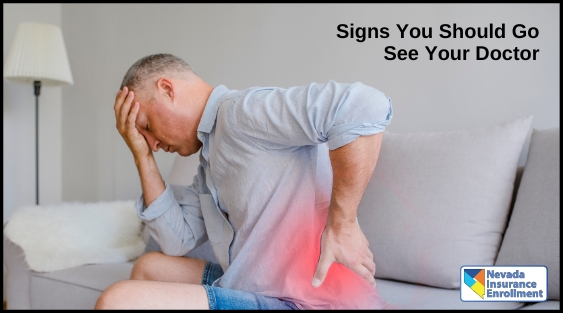
2) You Have Regular Back Pain
With so many of us spending hours a day in front of a computer, back pain is not an unusual complaint. Oftentimes, improving your posture and taking breaks throughout the day can greatly improve how you feel. However, back pain can also signal a kidney infection, slipped discs, pelvic inflammatory disease, or many other medical complications.
3) Your Cold Is Worse Than Usual
If you have a cold that gets unusually bad or develop a persistent cough that lasts longer than two weeks, seek professional help. This is especially true if you already have pre-existing conditions that are more likely to develop into additional serious complications, such as having a heart condition, diabetes, pregnant, or if you are over 65 years old.

4) You Experience Unexpected Weight Loss
Most people love the idea of losing weight without putting forth any effort, but if you experience sudden weight loss that cannot be explained with a change in your diet or exercise regimen, then it will be time to schedule a checkup.
5) If You Experience Pain in Your Chest or Abdomen
Persistent and intense chest, abdominal or pelvic pain can indicate an underlying condition that can worsen if not treated. Depending on where the pain is located, it can be a sign of gallstones, a kidney infection or even a heart attack. In these cases you would want to seek medical attention as soon as possible.
6) You Are Out of Breath After Normal Activities
If you are a little out of breath after an intense workout, you probably have no need to worry. However, if you experience shortness of breath during your normal day-to-day activities, then it may be time to meet with your doctor. This could indicate a condition such as COPD, emphysema, asthma or bronchitis, which your doctor can help you treat.
Finding Affordable Health Insurance Coverage with Nevada Insurance Enrollment
A trip to the doctor’s office to take care of an injury or illness could end up costing you hundreds of dollars or more out of pocket if you do not have health insurance. Fortunately, at Nevada Insurance Enrollment, our health insurance agents specialize in helping you find quality coverage that will not break the bank.
Please Note: We are not medical professionals, we recommend speaking with your doctor for any medical condition that develops.
Recent Posts

What Is Renters Insurance?
Renter’s insurance covers your personal property. If your property is damaged due to a covered peril such as a fire or theft, then you are compensated for your loss up to your policy limits. There are a variety of risks and events covered by renters insurance.
Are You a High-Risk Driver? What is Your Auto Insurance Score?
A high-risk driver is one who is more likely to file a claim. To determine your riskiness, your auto insurance company uses a complex algorithm that weighs in a variety of factors to come up with your auto insurance score.
Original Equipment Manufacturer (OEM) vs Aftermarket Parts
Do you have car damage that needs to be repaired or parts that need to be replaced? You may assume that the repairs will be done using OEM parts, which means “Original Equipment Manufacturer”, but this isn’t always the case so make sure to review the coverages you have in your auto insurance policy.
Search This Website
Most Popular Pages
By page visits (this month)
#1) Health Insurance Subsidy Chart
#2) Health Insurance
#3) Health Insurance WITH a Subsidy
#4) Insurance Blog
#5) Request a Quote
Top 5 Most Popular
By page visits (this month)
#1) Health Insurance Subsidy Chart
#2) Health Insurance
#3) Health Insurance WITH a Subsidy
#4) Insurance Blog Posts
#5) Request a Quote
Recent Posts
Rental Reimbursement vs. K4 or K5 Coverage
Rental reimbursement would reimburse you for either your daily rental charges or your policy limit, whichever is less. It can be used after any covered collision or comprehensive loss (assuming you carry collision and comprehensive coverage). K4 and K5 coverage can also help with post-accident “loss-of-use” costs.
Insuring and Preparing a Teenage Driver
Statistically speaking, young drivers are the riskiest group on the road. Studies have shown that they’re more likely to exhibit dangerous behavior like speeding or texting while behind the wheel.
How Does My Auto Insurance Company Make Its Profit?
Have you ever wondered how an auto insurance company stays in business? They make money because they sell a product that people are legally required to purchase. The average person pays around $900 a year for auto insurance but it’s nothing compared to how much a single car accident can cost.
Nevada Car Seat Guidelines
Car seats are designed to accommodate your household’s youngest passengers, making sure that they are as safe as possible while on the road. However, did you know that just like helmets and other safety equipment, car seats have a shelf life?